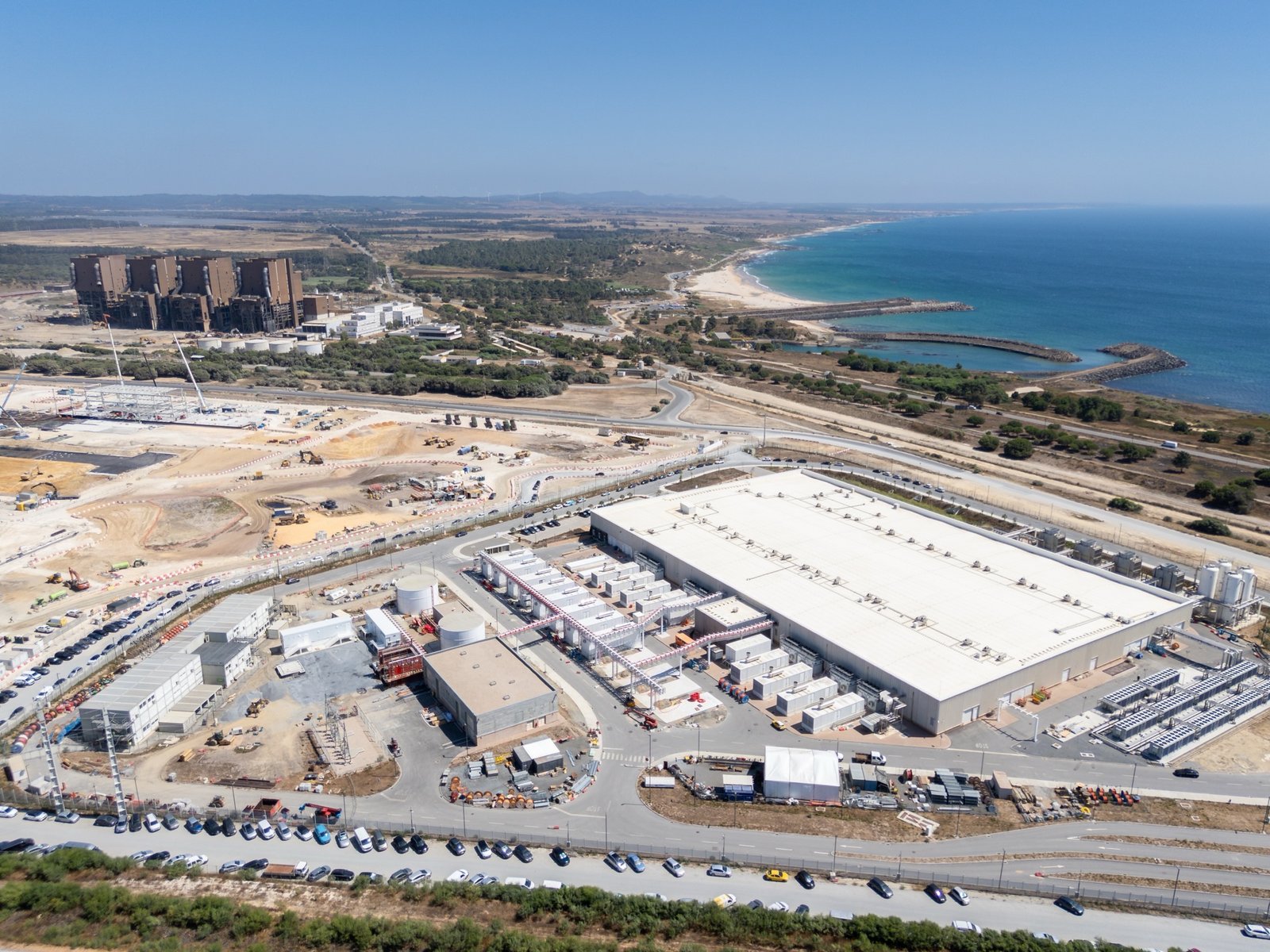
Grid, Fiber, Water: The Three-Way Bottleneck Choking AI Data Center Growth
The global surge in artificial intelligence workloads has triggered an aggressive land grab for 100MW-plus data center sites. As rack power densities climb from roughly 10kW to over 50kW to support advanced GPU clusters, legacy data center site selection criteria are no longer sufficient.
Developers, utilities, and infrastructure funds face a new reality: securing viable hyperscale land requires analyzing utility grid queues, dark fiber corridors, and cooling feasibility simultaneously, not as separate workstreams run by separate teams on separate timelines.
Critical Realities of AI Data Center Siting
1. Transmission Grid Queue Saturation. Finding 100MW to 500MW of grid headroom in primary tier-1 markets is increasingly rare. Developers are forced into tier-2 and tier-3 markets where grid queue speeds, utility substation upgrade schedules, and dual-feed redundancy vary wildly from one jurisdiction to the next, and often from one utility territory to the next within the same state or country.
2. Dark Fiber Latency and Dual-Path Routing. High-density AI training clusters require massive bandwidth and low-latency dark fiber access. Securing contiguous land that supports physically separated, diverse fiber entry points is mandatory to protect against single-point outage risks, a requirement that eliminates many otherwise attractive parcels the moment the fiber map is actually checked.
3. Micro-Climate and Water-Cooling Restrictions. High-density GPU racks generate unprecedented thermal loads. In regions restricting evaporative cooling due to water scarcity, developers must evaluate micro-climatic wet-bulb conditions to optimize dry-cooling PUE efficiency, a constraint that can quietly rule out a site that looks perfect on every other criterion.
The Shift to Tier-2 and Tier-3 Markets
As tier-1 markets exhaust their available grid headroom, capital is moving into secondary markets that were never built out with hyperscale-grade infrastructure in mind. That makes the underlying screening problem harder, not easier: the further a market sits from an established data center corridor, the less institutional knowledge exists about its real grid, fiber, and water constraints, and the more that verification has to happen from scratch, on a compressed timeline, against competing bidders.
Automated Intelligence for Hyperscale Real Estate
Relying on traditional broker listings or manual utility requests introduces unnecessary timeline risk in a highly competitive market.
How PropVeritas Empowers Data Center Developers
PropVeritas delivers real-time land and site feasibility intelligence for data center sponsors worldwide:
- Grid and Substation Screening: identify contiguous parcels sitting near high-voltage substations and verified power corridors.
- Natural Hazard and Flood Exclusions: instantly cross-reference candidate parcels against 100-year flood zones, wetlands, and ground instability markers.
- Underwriting-Ready Reports: generate institutional site dossiers integrating physical terrain constraints, buildable envelope estimates, and land intelligence for investment committee review.
The next wave of hyperscale capacity will be built by the sponsors who can verify grid, fiber, and cooling feasibility on day one of site evaluation, not the ones who discover a fatal constraint after signing an option.
Schedule a briefing to see how PropVeritas accelerates hyperscale site acquisition.
Related Articles
PropVeritas fuses satellite Earth Observation, LiDAR terrain models, and government registries into a single site intelligence layer, screening grid, freight, hazard, and geotechnical constraints together instead of one specialist study at a time.
If site selection is the bottleneck on your next industrial or infrastructure program, we would welcome the conversation.